Make chocolate into a bite size and sell it for an annual income of 10 billion yen?
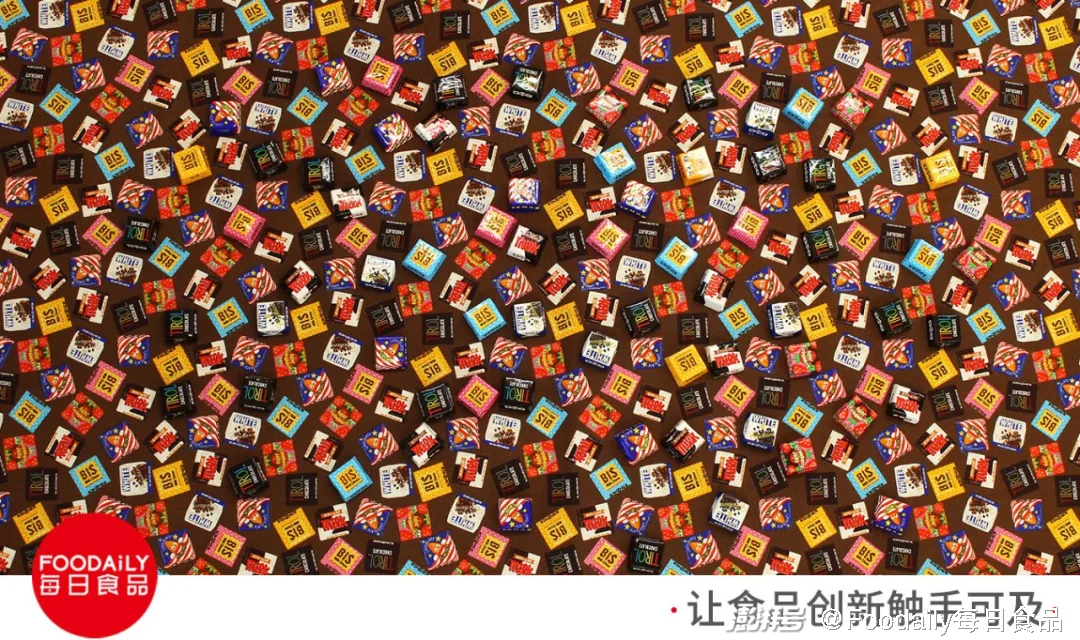
"The small chocolate on the 20-yen side has achieved an annual income of 10 billion yen. Can Japanese national chocolate conquer China’s stomach?"
Text: Chiyuko Qiu
Source: Foodaily daily food (ID: foodaily)
20 yen, equivalent to about 1.2 yuan.
In Japan, there is such a national chocolate brand, which has been popular for nearly 60 years only by relying on products with a unit price of 10-20 yen. Every Japanese has seen this familiar square chocolate wrapped in colored candy paper at least once in a convenience store or supermarket, with a side length of about 3 cm and a bite size, which is very convenient to share and carry. It is Tyrol chocolate.
In fact, some consumers in China may be familiar with it. This kind of chocolate has gradually appeared on the shelves of convenience stores and supermarkets in some parts of China. In Weibo, the number of fans of its manufacturer, Matsuo Chocolate, has reached 23,000. Some novel tastes have even become an eye-catching topic for food bloggers.
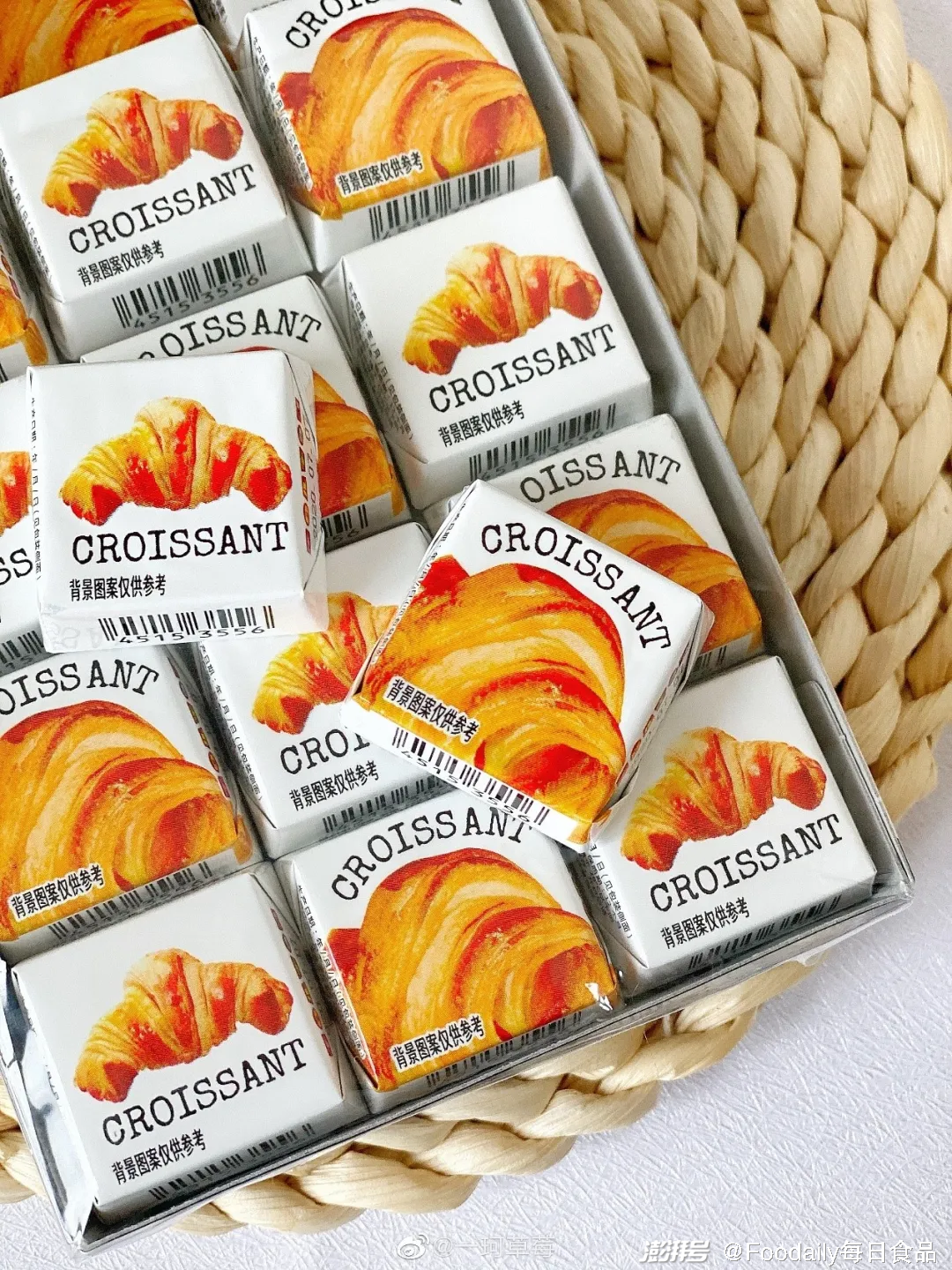
Weibo blogger @ Yike Strawberry shared the croissant taste of Tyrol chocolate. Image source: Weibo
As a super-long hot-selling chocolate product in Japan, statistics show that the annual sales of Tyrol chocolate exceeds 700 million pieces and the annual sales exceed 10 billion yen. The company behind the national brand-Matsuo Co., Ltd. is actually just a small family business with about 200 people.
How did Tyrol chocolate make a success of 10 billion yen from 20 yen each, and it has been loved by generations for more than half a century? What is its birth history? Why is it so popular? What is the secret of success?
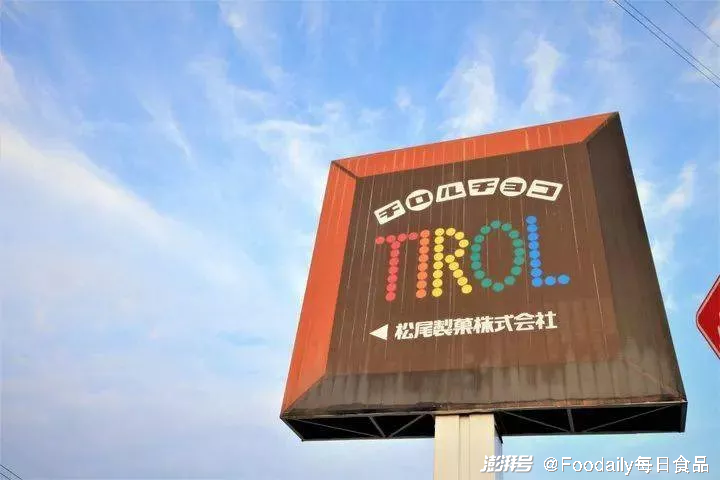
Matsuo fruit making co., ltd
How was the national brand Tyrol chocolate born?
Although Tyrol chocolate is now a household name in Japan, it seems that its subsidiary, Matsuo Tobacco, is not well known.
Matsuo is a typical family business. From 1903 to now, it has experienced four generations of descendants. With excellent business acumen and sharp ability to capture people’s hearts, each generation of descendants has left a colorful trace in the history of the development of this small enterprise. From their stories, we can witness the ups and downs of Tyrol chocolate in the ever-changing Japanese candy market, and it seems that we can find the real reason why the brand has been selling well for many years: reading it constantly.
The first generation: named after Matsuo, it was positioned as an artifact for manual workers to relieve fatigue.
Beginning in 1903, the first-generation founder Matsuo Jiji began to make and sell candy products in Tagawa City, Fukuoka Prefecture. At that time, Tagawa City was a prosperous town due to coal mines, with a large number of manual workers, and candy could relieve their fatigue and replenish their energy. This was the starting point of Matsuo’s tobacco-making business, and it developed its business by selling candy such as nougat to coal miners.
The second generation: Tyrol was born, and the low-price strategy aimed at children was a great success.
Japan became increasingly prosperous after the war, which was deeply influenced by western culture, and it was also clearly reflected in the changes of people’s dietary preferences. Matsuo, which used to be the main selling point of traditional candy, was gradually weak at that time, and the product sales were not good. In order to reverse the dilemma, Matsuo Yoshinobu, as the second generation successor, quickly caught people’s growing interest in western sweets such as ice cream and chocolate, so he decided to shift the strategic focus of the company to chocolate.
It is during this period that many well-known chocolate brands such as Lotte, Meiji and Morinaga have entered the chocolate market. There are two core strategies to differentiate Tyrol from many chocolate brands: one is low price, and the other is targeting children.
In postwar Japan, chocolate was a "luxury". At that time, a bottle of milk was 15 yen and a cup of soba noodles was 40 yen. At that time, chocolate cost about 40-100 yen, and most of the products were designed for adults. For children, the greatest pleasure is to buy candy at the local candy store with a small amount of pocket money given by their parents, up to 10 yen or 20 yen.
Insight into this gap in demand, Matsuo Yoshinobu put forward the idea of "making chocolates that children can buy with pocket money", and defined children as the core user group. The low-priced candy store that children love to go to is the main sales channel, while the people-friendly price is its core competitiveness.
Therefore, in the planning stage when the goods have not been developed, Matsuo Yoshinobu has decided to set the sales price of chocolate products at 10 yen. However, the low price has also brought great problems to the cost reduction. If all chocolate is used as the material, the cost price will far exceed the sales price. To this end, Tyrol tried to find a way to kill two birds with one stone with good flavor and price. After a lot of experiments, Tyrol decided to adopt the formula of adding nougat to chocolate, so he introduced the first generation of Tyrol chocolate in 1962.
The first generation of Tyrol chocolate was "three mountains in a horizontal shape" (three small strips connected), and it used gold packaging to create a sense of luxury. As soon as it went on the market, it caused quite a stir. You can buy such high-quality chocolate candy for 10 yen, which instantly received many children’s favorite and became one of the popular snacks at present.

The first generation of Tyrol chocolate Image source: middle-edge.jp
In the crisis of 2002, the price increase was not paid, but it became "small" but reversed the trend?
The low-priced product of 10 yen made Tyrol taste a lot of sweetness among children, but it also almost made Tyrol fall into a crisis of survival.
In 1973, the first oil crisis directly hit the Japanese economy, inflation developed rapidly, and the price of sugar, which is essential for making sweets, tripled in just one month, and the price of chocolate kept rising. This is undoubtedly a huge bad news for Tyrol, who has small profits but quick turnover.

Chocolate price index in Japan Image source: Statistics Bureau of the Ministry of Internal Affairs and Communications
Under the pressure of survival, Tyrol had to consider raising prices to alleviate the cost pressure. In 1974, the price of Tyrol was raised to 20 yen, and the packaging design was changed to shape the image of new products. In 1976, the price was raised to 30 yen again. At that time, Tyrol thought that even if the price of the product increased, it would be very low in the chocolate market, and it still had a considerable price advantage. He firmly believed that the price increase would not cause too much waves.
However, reality has taught Tyrol a good lesson. For a long time, children have already got the stereotype that "Tyrol chocolate is worth 10 yen", and "children can easily buy it with a coin" has become the essential value of Tyrol chocolate in the market, as if it had become a common sense. The operation of price increase broke the children’s "common sense", which made the sales of Tyrol chocolate gradually decline.
The market reaction made Jixin clear what consumers really want and define for Tyrol. For children, compared with its packaging, size and weight, it is most important that 10 yuan can buy Tyrol chocolate. In order to save Tyrol’s decline, the second generation of Jixin decisively decided to readjust the price of chocolate to 10 yen. Under the pressure of cost, he decided to make Tyrol chocolate smaller, from the original "three-mountain strip" to a "single-mountain square" with a side length of 2.5 cm.

In 1979, Matsuo Fruit Co., Ltd. launched a brand-new square tyrol chocolate with nougat flavor of coffee. In the packaging design, the color "TIROL" logo was printed on the chocolate background. Fortunately, under the temptation of 10 yen, the children were not sorry for the reduction of two chocolates, but were attracted by the fresh experience brought by the square tyrol chocolate. A bite-sized, easy-to-buy, easy-to-carry and easy-to-share, smaller Tyrol chocolate soon spread among children as a substitute for money, "cleaning 3 Tyrol and copying homework 10 Tyrol", as a delicious and interesting companion, Tyrol thus penetrated into children’s lives and childhood …
However, the introduction of this single chocolate not only brought Tyrol these things, but also became the cornerstone of Tyrol’s hot sales. The single chocolate sales model is also an important reason for Tyrol’s chocolate to truly achieve national fame among many chocolate brands.
Sniff out the business opportunities of "convenience stores", stabilize the status of rivers and lakes in one fell swoop and expand to the whole country.
The "candy house" with unique showa style and the major supermarkets used to be the main sales places of Tyrol chocolate. However, with the development of economy and the changes of the times, the loose-tailed fruit making of single-grain chocolate gradually went on the right track and encountered new problems.
Since the 1990s, Japan entered the bubble era, the number of old-fashioned candy stores has been decreasing, and the sales volume of Tyrol has been greatly affected by the shrinking sales channels. On the other hand, with the economic downturn, Japan’s fertility rate is also decreasing year by year, and the country is rapidly aging, which also makes Tyrol’s potential consumers (children) decrease. Therefore, Toshihiko Matsuo, the third-generation successor of Matsuo Fruit-making, who just took office, put forward three expansion strategies to expand "sales channels", "target groups" and "sales areas".
At that time, Toshihiko turned his attention to the convenience stores that were booming and expanding rapidly. He keenly captured that the convenience stores with rapidly expanding market would be a new stage for the future development of Tyrol chocolate, and thought that convenience stores would be "new era candy stores", so he began to try to test the water in the north of 7-11 stores in Hokkaido. However, he found it difficult to sell the existing products, and the size was too small to print bar codes. So Tyrol upgraded the original size of 2.5cm x 2.5 to 3cm x 3cm to facilitate the display of bar codes, and the price was also adjusted to 20 yen. Tyrol, which was originally 10 yen, also kept it and continued to sell it through traditional sales channels.

A variety of Tyrol chocolates are displayed in the convenience store. Source: chocolabo
With the help of the east wind of convenience store market, Tyrol expanded the chocolate business to the whole country, and the sales volume increased greatly at one time. The popularity of Tyrol has also enabled convenience store companies to see business opportunities. At present, nearly 95% of convenience stores in Japan sell Tyrol.
Entering convenience stores means that the target users are no longer limited to children. After all, consumers of all ages will patronize convenience stores regardless of gender. However, in the face of the hot chocolate candy products produced by various major manufacturers in convenience stores, how can this small square stand out and be favored by consumers?
Tyrol’s answer is products.
700 products in 60 years, Tyrol’s fascinating product world.
In the face of convenience stores, new channels, new people and eyeing competitors, how can we stand out? Tyrol’s mind was wide open and he boldly put forward the idea of creating "chocolate products that consumers can’t expect". In product design, Tyrol followed two strategies, one was to emphasize rich taste changes, and the other was to emphasize unique packaging design.
"Infinite" Flavor Combination of One Side Chocolate
Unlike chocolate with only one flavor, the classic Tyrol chocolate can be roughly divided into three layers: the upper layer, the center layer and the bottom layer. Seeking inspiration from the food culture all over the world, and combining the three layers with materials with different textures, tastes and flavors, we can realize countless flavor combinations that excite consumers in 3 cm chocolate, and there have been countless explosions in hundreds of products of Tyrol. This paper summarizes several typical product development strategies of Tyrol chocolate:
Japanese dim sum, a model of integration with foreign countries.
Japanese dim sum flavor, characterized by moderate sweetness and elegant taste, perfectly combines Japanese dim sum with western chocolate. For example, Mashu series with various flavors has become a very popular product for consumers because of its unique texture. In addition, potatoes, sweet potatoes and roasted chestnuts are also popular Japanese dim sum elements in Tyrol chocolate.
Among them, the most popular single product is the soybean powder potato chocolate launched in 2005, and the rich soybean powder flavor chocolate is wrapped in QQ-playing potato. Once it was launched, it set off a huge response. In one winter alone, the sales of single items in convenience stores reached about 29 million pieces, and the sales in bags reached about 100 million pieces, accounting for about 20% of the total sales of Tyrol chocolate.

Western-style desserts reproduce authentic quality.
Inspired by western-style desserts, such as walnut chocolate cake, cheesecake, muffin, etc., it is characterized by accurate element grasping and flavor re-engraving, authentic quality, and tastes like eating real sweets. In addition, caramel pudding, jelly, tiramisu and other desserts can faithfully reproduce the texture and flavor in Tyrol chocolate.
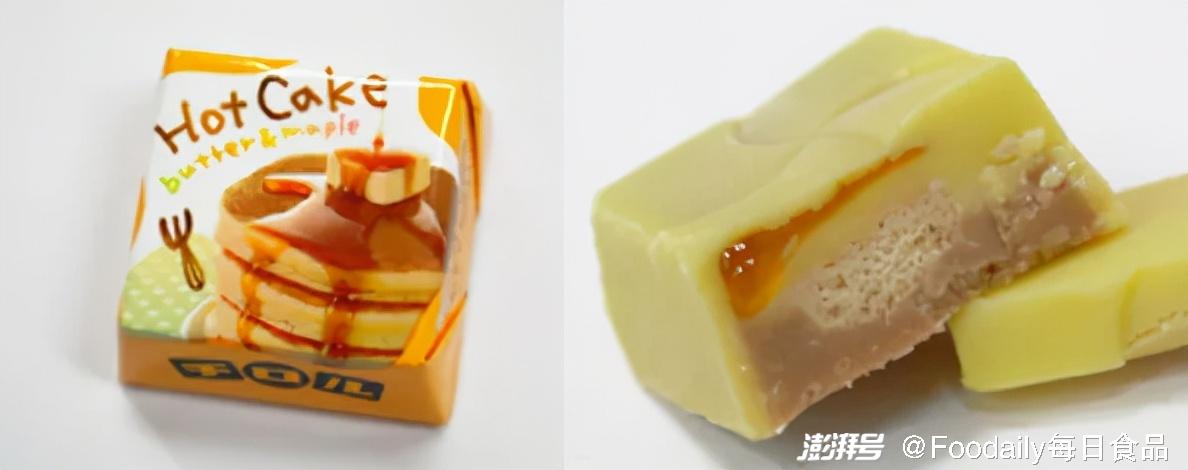
Hot cake-flavored Tyrol chocolate with muffins, butter, honey, maple syrup and other elements and layers.

Rich and mellow white chocolate and bittersweet cocoa cookies are matched, and the crispy black cookies are addictive.
Turn an enemy into a friend and sign a joint name with a competitor?
In addition to the breakthrough in taste, Tyrol’s innovation should be the favorite brand in the whole food industry in Japan to play with joint names. Moreover, its joint names will often be together with competitors, such as Morinaga, Gregor, Meiji, etc., which have all been jointly signed with Tyrol. Tyrol believes that it is not a self-interested marketing method to make an amicable friendship with competitors and create a win-win situation by combining strength and strength with the popularity and consumer base of both sides.
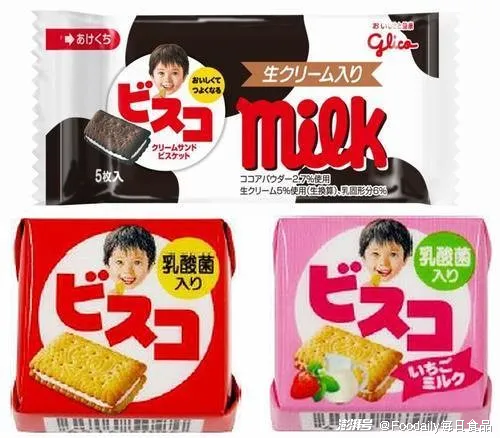
Co-signed with Gregory

Co-sign with Milky
Regional restrictions, combined with local specialties
As early as after the 2011 Northeast Earthquake, Tyrol began to pay attention to "local" specialties in various regions of Japan, consciously combined chocolate with specialties, and gradually introduced products with localized labels. With the "regional revitalization" policy put forward by Abe’s Cabinet in September 2014, Tyrol has accelerated the research and development and production of localized products. These four chocolates reproduce the famous flavors of Hiroshima (Maple Leaf Steamed Bread), Aichi (Maple Sugar Waffle), Iwate (kamome Yu Zi Dim Sum) and Saga (Raytheon Chocolate) respectively.

Nearly 60 years have passed since the first Tyrol chocolate was born. Every Tyrol chocolate will have new products. It is estimated that more than 700 products have been launched so far, including more than 400 products classified by taste, half of which are internally developed products and the other half are products designated by specific regions and retail chains.
In addition to classifying by taste and matching different scenes and needs, the changes of packaging and forms (single product, multi-flavor combined packaging, cup packaging, etc.) and products that are limited to sale only in festivals or seasons will also be different. In addition, besides the classic square, Tyrol chocolate has made more attempts in new sizes. For example, Petitrol, which was launched in September last year, reduced its shape to about 1/24 of its original size, including five different flavors. The ultra-mini size made it very popular.

Customized packaging to provide consumers with customized "original" chocolates.
Grasp the emotional value of chocolate. In 2007, Tyrol Chocolate launched DECO chocolate service which can customize the packaging design. Consumers can easily operate and order by computer, and print personalized photos and images on the packaging of Tyrol chocolate.
This exclusive sense of ceremony makes Tyrol chocolate, which is easy to share in various occasions, easily become a popular choice for holiday celebration, gift giving and personal commemoration.
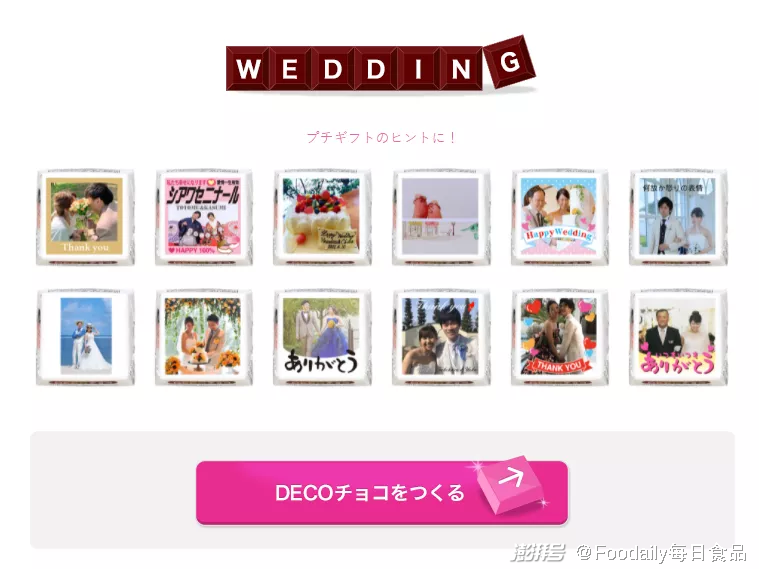
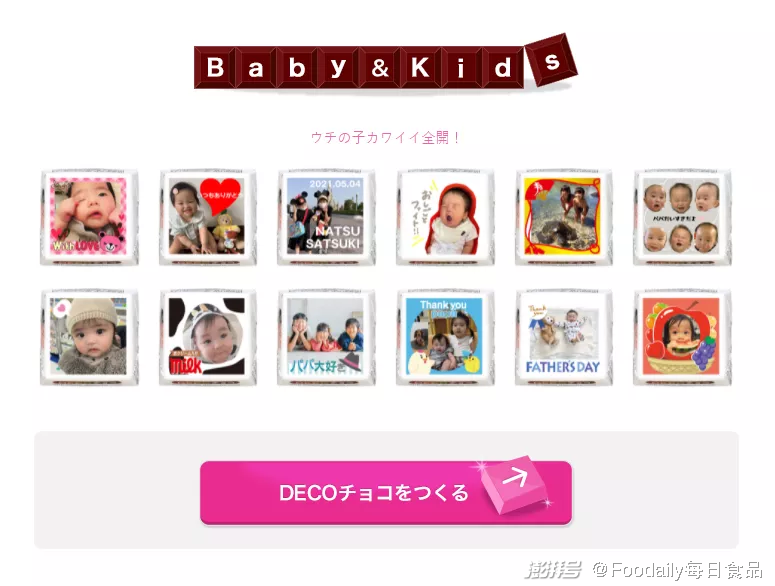
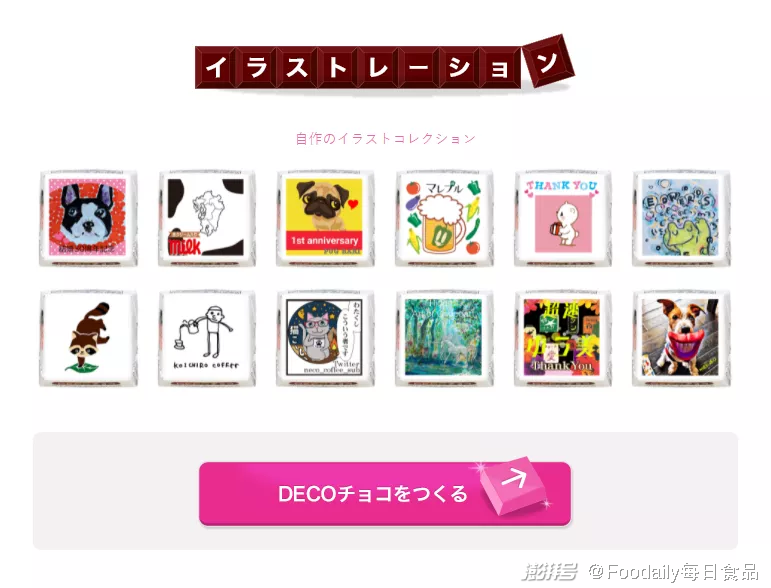
Some customized Tyrol chocolate products displayed by Decocho in official website have themes of "Wedding", "Baby" and "Home-made Illustration".
What is the secret of long shelf life?
Even today, Tyrol Chocolate keeps the update speed of new products almost every month, and continues to win the hearts of the vast audience from children to users.
What is the deep secret of Tyrol chocolate’s long shelf life that has fascinated consumers for so long?
Familiar "freshness"
In fact, in the Japanese market where products are dazzling, if new products are constantly introduced, consumers will get bored. However, Tyrol Chocolate has been trying hard to challenge consumers’ taste with the familiar square chocolate image, and has developed a large number of chocolate tastes that have nothing to do with chocolate in consumers’ common sense, conveying the core idea that "Tyrol Chocolate" has rich taste and replica flavor, shaping the familiar brand awareness of "Tyrol" chocolate in the hearts of several generations, and at the same time, the advantages of one bite size, single grain purchase and low price make this simple taste of new things quickly recognized by consumers.
Shorten the life cycle of products, limit the production quantity of products, switch to the next new product when the products are sold out, and the products that are popular in the market will continue to be sold in the next round. This cycle is a strategy for the company to cope with market saturation and crowded competition, and make consumers feel hungry for the products. In this way, since 2000, Tyrol has launched more than 20 new products with different tastes every year. With the playful and novel packaging design, it is difficult for adults, children, women or men not to arouse the freshness of consumers.
What flavor of Tyrol chocolate will be introduced next? Always bring consumers a never-ending sense of surprise in terms of taste and packaging design, which is the initial intention of Tyrol brand.
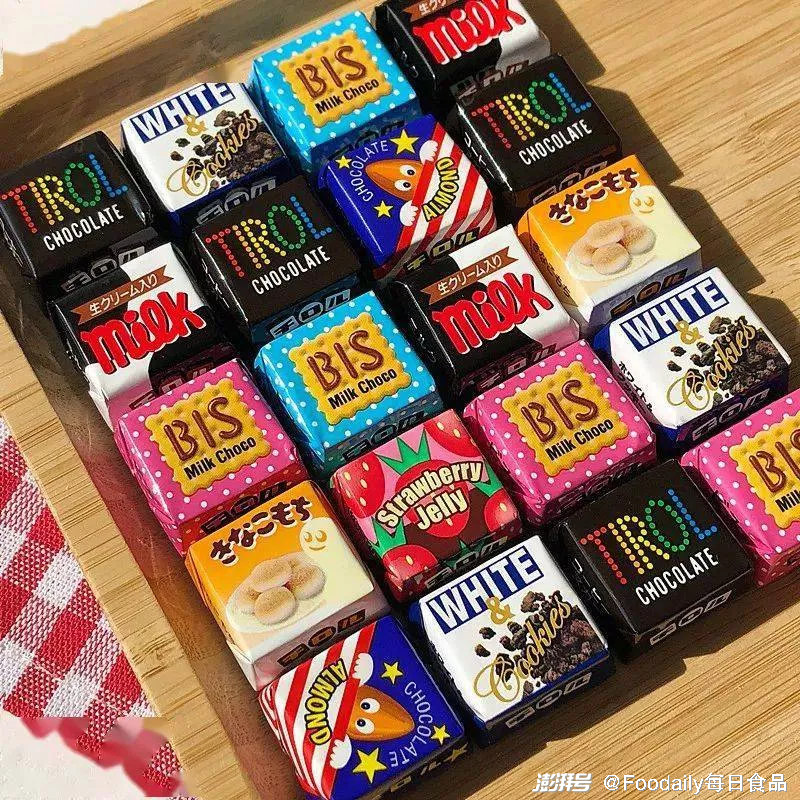
Some products of Tyrol Chocolate Image Source: Tyrol official website
Do not sell products, sell "fun" and "innovation"
Of course, in order to achieve this goal, Tyrol has spent a lot of energy and time on product planning.
Within Tyrol, the product development atmosphere of "fun" and "innovation" is emphasized. The president of the company believes that "when making products, we need to have fun, and the candy that consumers appreciate should provide fun and freshness. This requires the creator to have feelings, thoughts and souls when creating products. Only in this way can we impress consumers."
Product development in Tyrol is mainly divided into two departments, one is responsible for planning and design, and the other is responsible for research and prototyping. The company doesn’t have a marketing department and doesn’t do market research and other activities. Members of the development department put forward product proposals through brainstorming. At the meeting, suggestions and ideas from members, other departments of the company and sales ports such as convenience stores, supermarkets and wholesalers are introduced from all angles, and the sources of inspiration are not limited. As long as people can feel the concept of "an interesting product is coming out again", they will try to make it a product prototype.
Many companies will carefully study the fashion trends and reasons before starting to produce prototypes. But it doesn’t apply to Tyrol. The company has a strong spirit of challenge from top to bottom. Anyway, we should make it and try it, and then adjust and improve it quickly.
"Whoever has a good idea can produce a product", which is the company’s consistent style. The company’s twice-a-year bonus is completely linked to its business performance to create a corporate culture in which employees voluntarily engage in product development. Because of the president’s firm product concept and organizational culture, employees are constantly infected by this positive belief. You can express your inspiration in a small chocolate at will and create an unprecedented flavor and combination. This interesting experience and exciting commitment have attracted many young employees to become product developers.
The open and free atmosphere makes everyone have extraordinary creativity, and countless idea emerge, eventually creating a lot of exciting and surprising products.
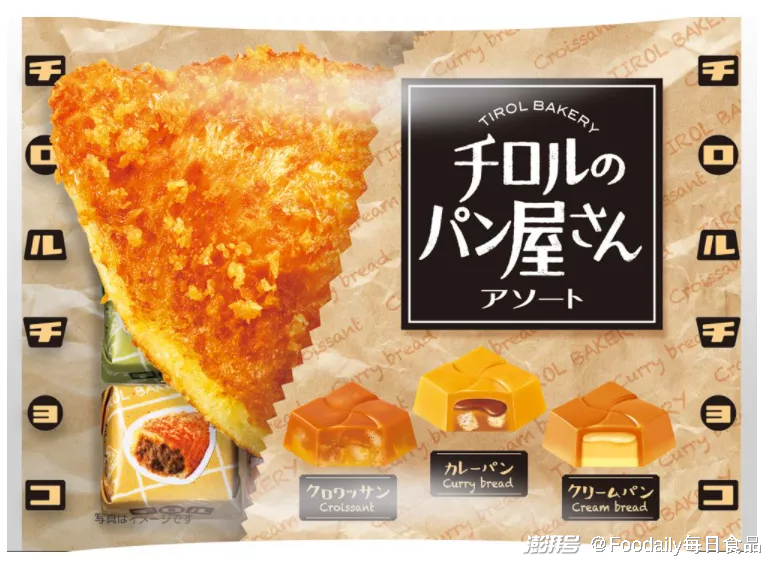
Curry bread chocolate, which caused a topic in SNS, contains bread particles.
Understand the changes of the times and continuously meet the needs of consumers
The success of our discussion of Tyrol may be attributed to its meticulous division of people and needs, its bold and innovative scene mining, its varied and fresh tastes, and its wise decision to change sales channels in time. However, the essence of all this is that Tyrol has been doing one thing, that is, reading the times. Tyrol deeply interprets the changing direction of the times and the most essential needs of people in different times.
Someone once described it like this: "Watching the birth history of Tyrol is the modern history of Japan itself". Although there is a little exaggeration in this statement, it is not bad. In the early era of material shortage, the essence of Tyrol products was to provide "cheap and delicious food". Later, with the improvement of material conditions and rapid economic development, price is no longer the primary condition for consumers to choose products, and it is impossible to meet the needs of consumers simply by taste. So Tyrol began to adjust his direction and put forward the concept of "lighting up the world with interesting candy", and created products full of color, fragrance and interest, which constantly stimulated consumers’ nerves by making products toys, brought consumers a steady stream of surprises and kept consumers curious about Tyrol.
In the post-epidemic era, the whole of Japan was shrouded in a dull atmosphere. The company condensed its mission to "make you smile" and committed to bringing more fun and value to users through Tyrol chocolate, so that users can produce more smiles. This is not only based on the fun of the product, but also on the implementation of interesting ideas in brand, founder, marketing, SNS and other aspects, such as launching super-large air cushions and launching various interesting SNS topics.
Can the strategy of going out to sea, expanding, parity and fun work in China?
After conquering Japanese consumers, Tyrol’s footsteps did not stop.
Now the baton of Tyrol’s brand management has been handed over to the fourth-generation successor Yuji Matsuo. Japan’s aging population trend, the evolution of channels, the black swan crisis and other signs have made this young heir feel the crisis, and Tyrol’s development strategy has also been adjusted in the future.
Yuji once said that although pine tail fruit making is the business model of family business, it has always adhered to the spirit of "starting a business one generation at a time". Everyone, President Matsuo, has the consciousness of abandoning the past glory, being uneasy about the status quo, and striving to seek new and vigorous development for the enterprise in the changes of the times. Just as the Matsuo generation created the Matsuo fruit making, the second generation created the Tyrol chocolate brand, and the third generation expanded the brand to the whole country, Yuji, as the fourth generation, has already invested in a broader market in an attempt to spread the Tyrol craze overseas.
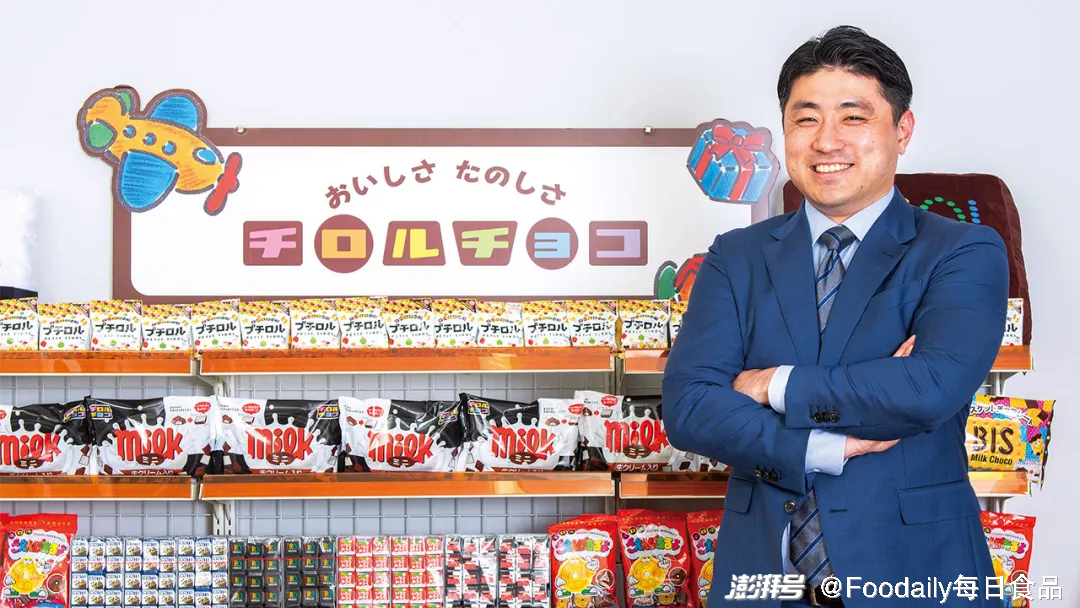
Matsuo Yuji, the fourth generation president of Matsuo Fruit System Image source: Nikkei Business
Till now, Tyrol chocolates have been exported overseas after being made in Japan. In order to better integrate into the lives of overseas consumers and quickly occupy overseas markets, Tyrol played "One Tirol! One Smile! One Asia!” Slogan, and set up a factory in Vietnam in 2020 as the company’s first overseas base.
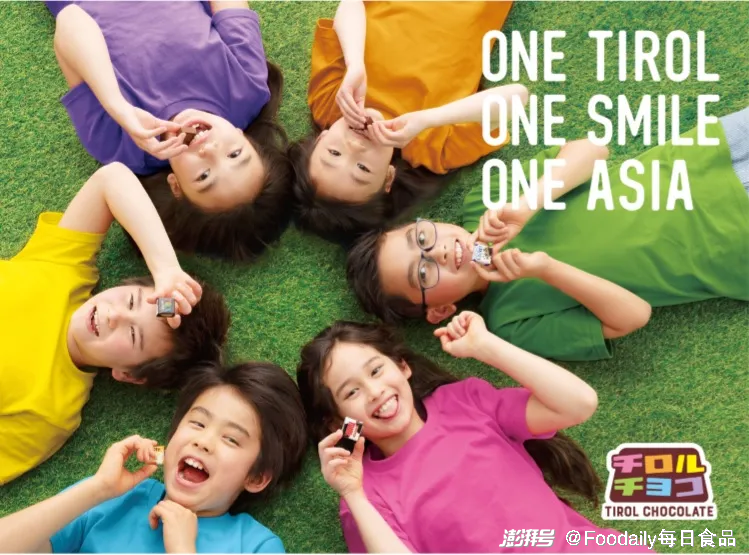
The current management policy of Tyrol Chocolate Image source: Tyrol official website
At present, Tyrol has been sold in Chinese mainland, Taiwan, China, Hong Kong, China, South Korea, Thailand, Vietnam and other Asian countries and regions, and will launch products with limited flavor according to local customs and eating habits. In the future, Tyrol plans to gradually expand its territory to Europe and America from ASEAN. Yuji said that Tyrol’s goal in the next 10 years is to achieve 10% market share in ASEAN and increase the proportion of overseas sales to 30%.
In China market, Tyrol chocolate is not sold under the name of "Tyrol", but under the brand name of Songwei chocolate. Foodaily found that chocolate with pine tails has quietly occupied a place on the shelves of convenience stores and supermarkets in some areas.
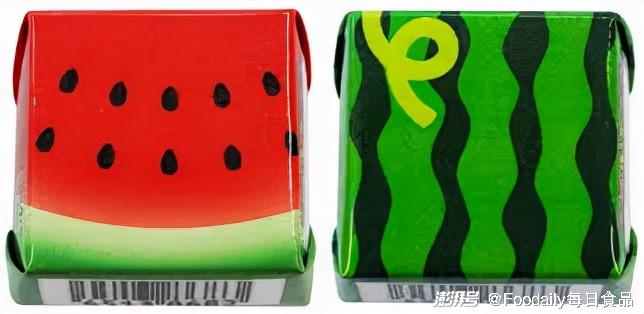
In order to cater to consumers in China, the sweet taste of watermelon Tyrol chocolate has been adjusted. Image source: Wenchun Online.
However, in the China market, chocolate has fallen out of favor for many years. Since 2015, chocolate sales have been declining all the way, and in 2020, the domestic chocolate retail market has shrunk by nearly 2 billion yuan compared with the previous year. Foreign brands dominate the market but show signs of decline, and local traditional giants are unable to save the situation.
In the final analysis, chocolate has not been "well marketed" for too long. Chocolate, which used to say that it was a symbol of romance, has more substitutes. In the past two years, new brands such as Daily Heiqiao and Fox Office have given chocolate a new story that is "healthier" and "more creative" and is more accepted by young people, so it has risen rapidly.
Chinese eats an average of 2 chocolates (about 100 grams) a year, which is nearly 100 times that of China in Europe. Under this background, it’s hard to say whether Tyrol’s strategy of being affordable and close to the people, selling a single chocolate and being interesting can be accepted by consumers in China and open up new categories and new scenes. However, in this blue ocean market, it is believed that Tyrol’s business history is of great reference value for new brands to seize business opportunities and stand out from the crowd.
For some established food enterprises, Tyrol’s long-lasting prosperity is worthy of reflection and introspection. In the process of the great ship of the times, have we stepped out of our comfort zone and are willing to break through and challenge ourselves? Keep pace with the times to meet the consumption needs of different times?